Archive for Paper Crafts

happy birthday Folding Trees

folding trees

Folding Trees, the papercraft site that Eve and I co-founded, is a year old this week! It’s been a great first year; between the two of us, we’ve written over 400 posts, and published tons of paper-crafty inspiration and tutorials.

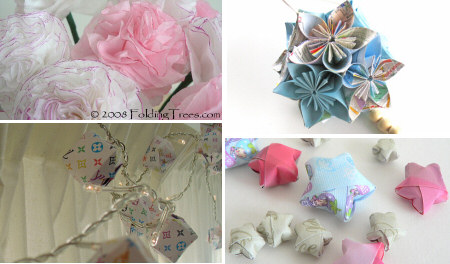
Here are a few of our most popular tutorials from the year:

folding trees - year 1
clockwise from top left: 1) my Tissue Paper Carnations; 2) Eve’s Kusudama Ball (part 1 and part 2); 3) my Lucky Wishing Stars; 4) Eve’s Balloon Lights

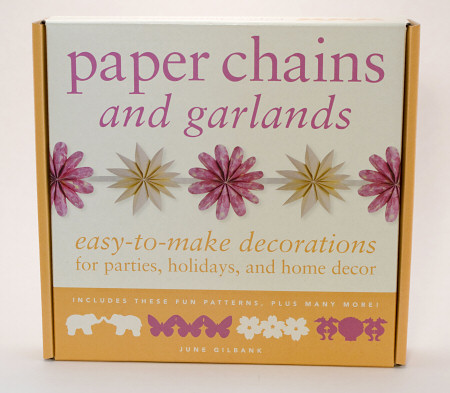
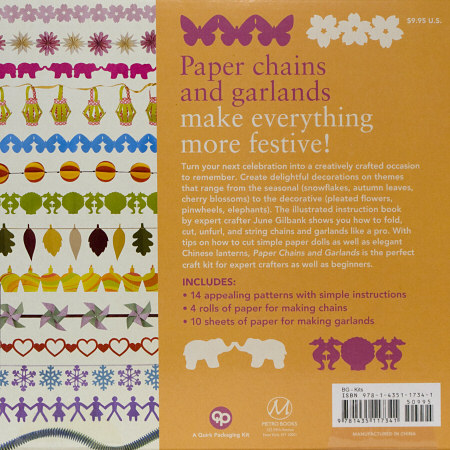
Of course, it’s also through my work on Folding Trees that I got a book deal (yay!). My book, Paper Chains & Garlands, is at the printing stage, and should be released in late summer or early autumn – I’ll keep you posted as I hear more!

If you have any interest in crafting with paper, do check out Folding Trees for a daily dose of projects and inspiration :)

Comments (6)

the big reveal

You may have noticed that 2009 began with my announcement that I am taking the leap into self-employment, and then… well, not a lot else. Two patterns in two months is hardly impressive, especially when I should have all this extra time available. But I haven’t just been lazing about; now I can (finally) reveal what’s been going on…

Are you ready for my huge, exciting news?

paper prototypes
Early prototypes

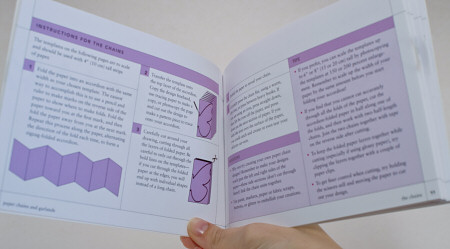
I have been writing a book! But wait – it’s probably not the book you’d guess I’d write… It’s a papercraft book about paper chains and garlands, and it all came about through my work on Folding Trees. I’ve been working really hard for the past couple of months designing the projects, creating the samples, writing the instructions and drawing the illustrations, and now it’s finally coming together!

paper prototypes
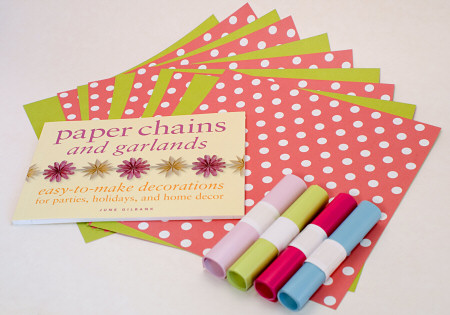
Pretty papers

My book should be out in the US through Barnes & Noble in late summer 2009. The process has been a lot of fun, a phenomenal amount of work, and a big eye-opener into the world of print publishing. I’ll share more details as the publication date approaches…

Now I am returning to my crochet designs, and I should have two new patterns for you by the end of the week!


ArtFire - Buy Handmade - Sell HandmadeAnd one more thing: If you sell your crafts and you’re still undecided about signing up for an ArtFire membership, I strongly suggest you give it some more thought. Since I wrote my last ArtFire post, the $7 advance memberships have been going very quickly – half of the remaining memberships have been snapped up in the past 10 days! If you miss out on one, you’d have to pay $20 per month if you want to enjoy the full benefits of selling on ArtFire.

Looking at my March sales to date, my ArtFire sales are at 22% of my Etsy total, which tells me that the monthly fee has already been worth it! I would guess that the last $7 memberships will be gone in about a week, so please do consider grabbing one before it’s too late. And if you do, please list me (planetjune) as your referrer – thank you! Here’s my direct link: Register on ArtFire.com.

Comments (8)

animal paper models

This post was originally published on my old papercraft site, Folding Trees.

hitachi-animal-papercraft

Hitachi Japan have created some endangered species animal paper models. I thought I’d try their sea turtle model so I could give you a quick review.

The colours printed less vibrantly than shown on the website, although I accidentally printed it onto cheap paper using my printer’s economy settings, so that’s probably why! The model only has 2 pieces (head and body) and printed onto 1 sheet of paper. Although the key is written in Japanese, you really don’t need instructions (and see my previous tutorial on this type of paper model if you need more assistance). Cut around the solid lines, fold the dotted lines, glue the tabs - it was very straightforward and I’m impressed with the result of such a simple design:

seaturtle_hitachi

So cute!

If you like animals, don’t forget to check out the other models in the series too.

Comments (2)

tea bag folding

Tea bag folding? Huh? Have I gone mad?! Nope, that’s the name of an interesting paper craft that I’m demonstrating on Folding Trees this week. Click through to my tutorial to find out more and see my tutorial to make these little paper medallions:

tea bag folding by planetjune

And in other news, I’ve been busy creating some cute new seasonal crochet designs. I’ll be unveiling them soon, so watch this space…

Comments (1)

shadow tree by candlelight

You may have noticed the black papercut trees I made for the background of my Halloween design photos. I was wondering if I could reuse them somehow to create a new tutorial for Folding Trees, and I came up with the idea of using a candle to create a large shadow silhouette of the tree on a wall. The trees I had cut before weren’t suitable as I had cut them as background pieces at the edge of the scene (so there was only half a tree in each case!), so I drew and cut a new complete tree from black cardstock for this project:

papercut tree

And here it is by the flickering light of a candle:

papercut tree

What a transformation! I’m so happy with how it turned out! My papercutting attempts are getting better each time I try it, and I’m finding it easier to do simple freehand drawing without a reference photo too.

Oh, and if you’d like to see the finished tutorial, you can find it at Folding Trees!

Comments (2)

paper weaving

woven paper cards and bookmark by planetjune

Today I have a new tutorial up at Folding Trees showing how to weave paper strips into a coloured checkerboard pattern. The greetings cards and bookmark I made (above) use strips cut from old magazine pages!

Comments (2)

hummingbird pop up card

I’ve just reviewed this pattern for Folding Trees, and here’s the hummingbird card I made. Isn’t it gorgeous? And it looks a lot more complicated to make than it really is!

hummingbird pop-up card by planetjune

Click through to Folding Trees this week to read my review of the pattern and to enter our contest to win a pattern of your choice from Easy Cut Pop-up, the people who designed the amazing hummingbird above and many more wonderful pop-up card designs!

PS – Thank you to everyone for the Discworld love! Many of you have asked, so I’m in the process of writing another post about it, to give you a bit of insight into how I designed the Disc to make the landmasses – watch this space…

Comments (2)

Easy Cut Pop-up Cards review

This post was originally published on my old papercraft site, Folding Trees.

easy cut pop-up koala

Kirigami is a Japanese art similar to origami, but with kirigami you cut the paper as well as folding it, making it easier to create more complex shapes. Easy Cut Pop-up specialize in unique pop-up cards patterns with beautiful kirigami designs, such as the above koala and joey card. All their designs look wonderful, but are they really easy to make? I was given the opportunity to try one of their patterns, so I can now answer that question for you with this review!

__(‘Read the rest of this entry »’)

Comments

tissue paper carnations

This week on Folding Trees, I am running a daily series on different types of paper flowers. To get things started, I followed a few online tutorials to make tissue paper flowers, but the end results looked really childish – not the elegant decorative look I like. So I had a think and came up with my own method to make these tissue paper carnations.

paper carnations by planetjune

I think they look lovely – the darker petal edges add a lot of realism and give the flowers a more professional finish. My inspiration was some beautiful carnations I was given last winter (thank you, library friends!):

carnations

And here is a close-up of my paper version – pretty similar, don’t you think?

paper carnations by planetjune

If you’d like to see how to make your own, check out my tutorial on Folding Trees!

Comments (3)

paper models

This weekend, I made these paper models. They are made from PDF files that you print, cut, fold and glue together. The models are very well designed; cutting out all the parts is time-consuming, but it’s amazing that you can make something so realistic from a couple of sheets of paper!

completed paper models

You can now see my tutorial below with tips on how to cut and assemble models like these – as the instructions are all written in Japanese it helps to know them before you get started!


Tutorial: Cut & Fold Paper Models

This tutorial was originally published on my old papercraft site, Folding Trees.

If you look around on the internet, there are a multitude of printable cut-out-and-fold paper models available to download. They look amazing, but how easy are they to actually put together? How accurate do you have to be for them to look good? And, as a lot of them have instructions in Japanese, how easy is it to follow the instructions without understanding the text? In this tutorial, I’ll give you some hints and tips to make the process a bit easier!

My sample paper models are the Cape Penguin and Japanese Leaf Turtle models from the Konica Minolta Environmental Papercraft site. I like these models because they only use 2 sheets of paper each, and the animals are realistically designed. (For reference, the penguin is 6″ tall, and the turtle is 6″ long.) Check the end of this post for other paper model resources.

Printing the patterns

The instructions on my models say to use paper of between 0.20 and 0.24mm thickness (that’s about twice the thickness of regular copy paper). I think thin cardstock would be the best choice, if you have it available, but I used the thickest copy paper I could find (marked 28lb) and it was fine. Also, please note that these Japanese PDF files are designed to print on A4 size paper. North Americans with letter-size paper: remember to set the PDF Page Scaling to Shrink to Printable Area. If you forget this, the top and bottom of each page will be missing from your printouts. Not that I would ever make a mistake like that (ahem).

Understanding the line markings

Before you start cutting, you should make sure you understand where to cut! Below, I have annotated the legend for the cutting lines on the patterns I used – the line markings may vary on different diagrams, but the Japanese text should be the same for each type of cut or fold, so you should be able to match them up using my legend:

legend for cut and fold paper models

The fine dotted lines are positioning lines for attaching the pieces later – do not fold or cut along these lines.

Cutting the pieces

Use a sharp craft/xacto knife and a self-healing mat (or some thick scrap cardboard to rest your work on) to cut along all the ‘cut’ lines for each piece. You do have to cut accurately for the piece to come together properly, so cut slowly and carefully. If you haven’t tried papercutting before, you can use a metal ruler along the line you want to cut to guide you. I did this for my first model, then braved freehand cutting, which is much faster. The easiest way I have found to control the knife is to rotate the work so you make all your cuts in the same direction – from left to right (right-handers) or right to left (left-handers).

cutting out the paper model pieces

Folding

Refer back to the instructions to see where you need to fold the pieces. I recommend you score each line first – this makes it much easier to make your fold in the right place. To do this, use a blunt pointed tool (e.g. a bone folder or a darning needle) and a ruler to ‘draw’ along each line. You don’t need to press hard – you don’t want to cut into the paper, just dent it so it will naturally crease along that line when you fold the paper. I scored all the lines on the front side of the paper, and then mountain- or valley- folded each line as shown in the instructions.

Assembly

Once everything is cut and folded, it’s time for the fun part: assembling the model! The tabs are all numbered in the order you need to stick them down. Refer back to the diagrams in the instructions if you aren’t sure where to stick the tabs – it is not always obvious, but the instructions have diagrams with arrows showing where each tab should be stuck.

A note on adhesives: Don’t use a glue stick! It doesn’t grab the paper tightly enough, and your model won’t stay together. A general purpose white glue (I used Tacky Glue), applied sparingly to each tab, works very well. Apply glue to the first tab and position it. Hold the two layers of paper in place for a few seconds until the glue ‘grabs’ the paper and it stays in position when you release your pressure. Then apply glue to the next numbered tab, and repeat the process until all the tabs are glued down and the model is complete!

completed paper models

Conclusion

Making paper models is time-consuming and precise, but the end results can be quite amazing. Seeing your model come together at the end is worth all the effort of painstakingly cutting out all those pieces. Just take your time and enjoy the process :)

Here are some of my favourite sites where you can find paper models to print and assemble:

Comments (4)

Next entries » · « Previous entries
  • Welcome to PlanetJune!

    June Gilbank Hi, I'm June. Welcome to my world of nature-inspired crochet and crafting. I hope you enjoy your visit!
  • Follow me

    RSS FeedSubscribe to my blog by EmailFollow me on TwitterFollow me on Facebook
    Friend me on RavelryWatch me on YouTubeFollow me on PinterestMy photostream on Flickr
  • Categories

  • Archives

  • Like me on Facebook

  • Follow me on Twitter