
brushed crochet experiments
After the comment discussion yesterday about brushed crochet, whether I should have brushed the tail of my fox, and which kind of yarns you can brush, I realised that I didn’t actually have a definitive answer to give for that…
The technique of brushed crochet originated with is apparently an old long-forgotten technique that was reinvented by my good friend Brie aka Wibit/Roman Sock with her wonderful brushed animals and brushed crochet tutorial. Since then, brushed crochet has been popping up here and there, but there is no actual ‘yes/no’ list for which yarns can be brushed!
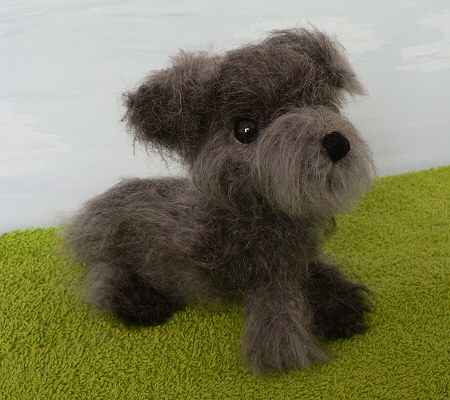
I made this Miniature Schnauzer puppy with the brushed crochet technique
I already know that wool, mohair and bamboo yarns work for brushed crochet, but I’ve read that acrylic and cotton yarns should not be used (why is that?). So, time for an experiment…
Hunting through my box of crocheted scraps and rejected pieces, I found an 100% acrylic grey piece, and a failed prototype made from black acrylic and green 100% cotton – perfect test candidates for the ‘do not use’ yarns. Here are the results after a little brushing with a pet slicker brush:
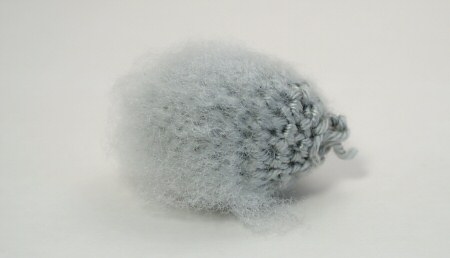
Acrylic yarn after brushing (right side is unbrushed for comparison)
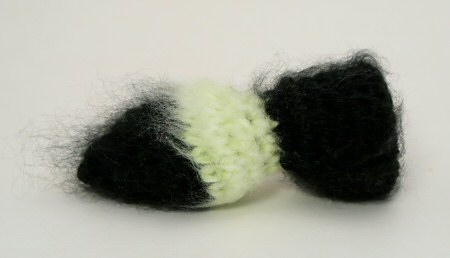
Black: acrylic yarn. Green: cotton yarn.
Guess what? They both fluffed up, and the yarns didn’t break! It was more difficult to generate fluff with the cotton and acrylic yarns than with the mohair blends I’ve used previously – you need to brush for longer to get the fluff to appear (especially with the cotton, which I suspect would never give a fully furry effect). The acrylic also made a sort of crinkly looking fluff, so wouldn’t be as good for a natural fur effect.
But, in general, I say brush away! Based on this experiment, I think any kind of yarn would work to some extent – if in doubt, crochet a small swatch first and brush it out to make sure the yarn doesn’t break and your work unravel before you achieve your desired level of fluffiness! All you need to get started is a wire pet slicker brush and a little patience.
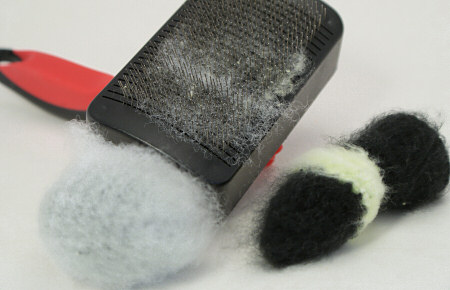
Be aware that this is a destructive technique – the brush yanks fibres out of the yarn, and in the process some fibres come out completely and are left on the brush (as you can see in the above photo). So please do use caution, and test-brush a swatch before risking something you’ve spent a long time creating.
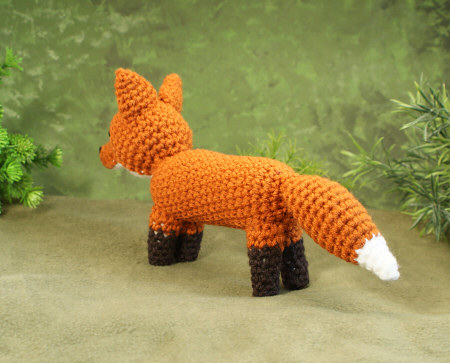
I still won’t be brushing out the tail on my red fox. Brushing masks the shape of the underlying crocheted piece and I don’t want that for my fox. But if you buy the pattern (coming soon!) then feel free to try brushing out the tail of your foxes – no matter which type of yarn you choose to crochet it from 🙂





 Email newsletter
 RSS
RSS Twitter
 Facebook
 YouTube
 Ravelry: June
 Instagram
Priscilla said
Hi June! Have you found any acrylic yarns in particular that work well? I haven’t done much brushed knitting but want to make a fairly large piece and would love to know if there are any specific brands you can recommend. I have an aunt who’s developmentally disabled who, now that she’s older, has moved from her group home to a nursing home (it’s cheerful, nice, she’s well taken care of, and she’s very happy there, thank god); I want to make a life-size stuffed cat for her bed so she can have a “pet” and I thought it would be much nicer if it was brushed. I want to use acrylic so nobody would have to worry about care or that it might get mothy, eventually. Any recommendations would be helpful. Thanks!
June said
Priscilla, all the acrylic yarns I’ve tried have worked well (although probably not as well as animal fibre yarn would). If you look at www.planetjune.com/brush, the penguin was made with Red Heart Soft and the chicks with Bernat Satin. As I say on that page, I always recommend you test-brush a swatch crochet (or knit) in a new yarn before committing to making a large or complex brushed piece with that yarn, just to be on the safe side.
June said
Robin: you’re the second person to tell me this! Seems like there’s nothing new under the sun – just rediscovery and modernization of older crafts. I wonder how many other forgotten gems there are in the crafting past (like punchneedle!) just waiting to be rediscovered…
Robin Andersen said
While your friend may have rediscovered brushing crochet, I don’t think she originated it. I did brushing of crochet at least 25 years ago and I know it was from something I read someplace, so I didn’t invent it either.
That being said and out of the way, I’m glad she rediscovered it and is making it more known to more people. The best yarn I have ever brushed, the one that turned out the best is a Phentex acrylic yarn. It brushes out to lion mane like thickness….
Jessica said
Mr Fox is going to have to go on my list of patterns that I must have – thanks so much for designing him he is adorable!
Rebekah said
wow, great experiment! I would have never even guessed that acrylic could brush so well.
June said
June (nice name btw!) I totally agree with everything you said here. I use mohair for my fluffy stuff – like the miniature schnauzer above – I just wondered what would happen if you didn’t have access to fancier yarns, and it doesn’t get more basic than 100% acrylic.
I’ve actually been wanting to make a fluffy bunny from angora for months – to go with my Alpaca made from alpaca and a whole series of others I have planned – but I haven’t been able to find a source of angora that wasn’t really expensive! Any angora sellers want to donate a skein to my cause?! It would be gorgeous and I’ll be happy to promote your yarn here!
June said
Good for you for testing and experimenting!
I think brushing will work best for yarns made of fibers with a long staple length and resilient to bending – think kid mohair and… ooh, angora rabbit! Yes, a bunny made of brushed angora would be fabulous. Any yarn that naturally makes a halo over time would be great. Many mohair yarns are actually brushed after spinning to bring out the halo – but if the fiber is weak (or the brushing too strong), you end up with bits of fiber all over you as you work with it. 🙁
From another crafty June
Puglette said
thanks june! i do see the difference the wool makes. the schnauzer is so cute and the brushed wool really makes it look like the actual fur of the dog. the acrylic and cotton samples do not have the same length and drape of the wool fibers. thanks for testing!!
hugs,
puglette
🙂