PlanetJune Craft Blog
Latest news and updates from June

PlanetJune Blog: Latest News, Patterns and Tutorials

blog redesign

Finally! 2 months after I announced my new logo, I’ve finally launched the new blog layout today. (If you’re reading this in a feed reader, please click through to get the full impact!)

Hopefully this won’t look too new and strange to you; the purpose of this redesign wasn’t to give my blog a new look, but to make it easier for you to use, and to incorporate the new logo.

Here’s the old look, as a quick reminder:
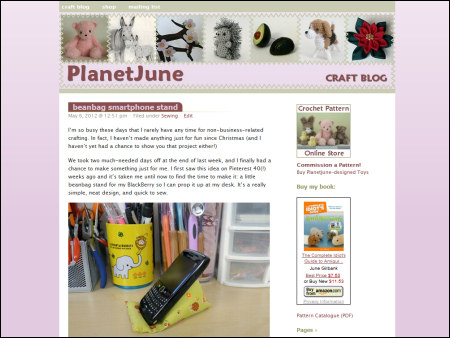
PlanetJune blog - old look

And here’s the new and improved version:
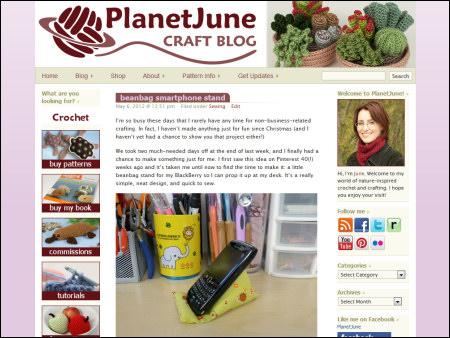
PlanetJune blog - new look

The new layout is slightly wider, which gave me space to add an extra sidebar down the left-hand side with quick links to the things people most often look for on my site. The actual sidebar contents are still in progress – I’d like to add some more prominent links to my Ravelry group and Flickr group, a link to an as-yet unwritten page for my crocheted art, and other things as and when I think of them – but that can wait until I have time.

I think the biggest improvement is to the header area. Gone is the ‘patchwork’ of images at the top that confused people into thinking they were all pictures of crochet patterns:
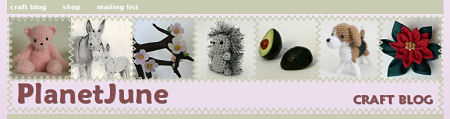
PlanetJune old blog header

Now there’s just one large clear photo, but if you refresh the page (or click to a different page on the blog) you’ll see that the image changes – you get a random one each time – so it hopefully still gives a feel for the variety of my patterns.

PlanetJune blog - new header

The almost-invisible main menu located above the header is gone (did you ever even notice it was there?!), and these impossible-to-find text links in the sidebar (I finally realised that a heading called ‘Pages’ means nothing to non-bloggers!):
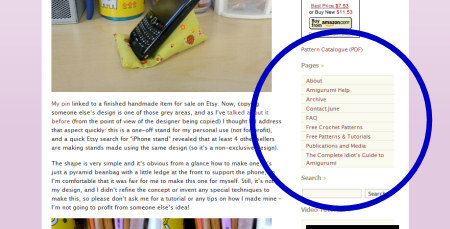
PlanetJune blog - old links
Ugh, big block of random text links (circled in blue)

All replaced by a more complete menu bar below the header. Everything you need to navigate my site is organised into drop-down menus, and there’s a more prominent Search box on the right.

PlanetJune blog - new menu

I still have to redo the rest of PlanetJune to match the new blog design and make it all more useable, but that’ll take a lot longer – I’d anticipated I’d need 2 weeks to complete the blog redesign, and it’s taken 2 months! I also need to figure out a better way to organise my crochet tutorials – now I have lots of photo tutorials and a growing collection of video tutorials, I’m going to need to find a clearer way to present them to you. Piece by piece, I’ll keep working on it all in between everything else – my goal is to have it all completed by the end of the year.

But, for now, I hope you’ll at least find the blog much easier to navigate! I’ve built up a lot of excellent resources on my blog (crochet and craft tutorials, free patterns, videos, etc), but they aren’t much use if you can’t find them 🙂
Comments (17)

beanbag smartphone stand

I’m so busy these days that I rarely have any time for non-business-related crafting. In fact, I haven’t made anything just for fun since Christmas (and I haven’t yet had a chance to show you that project either!)

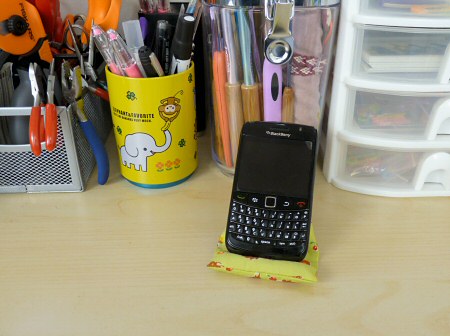
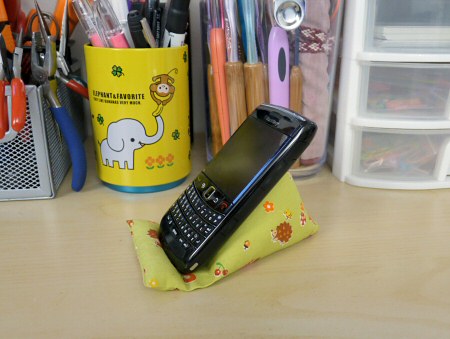
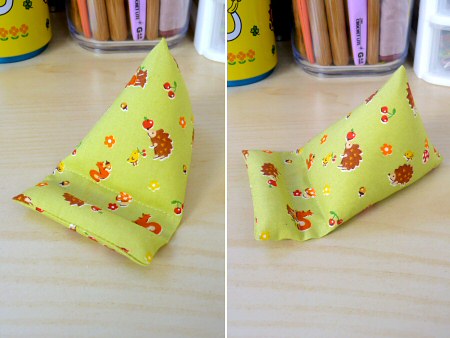
We took two much-needed days off at the end of last week, and I finally had a chance to make something just for me. I first saw this idea on Pinterest 40(!) weeks ago and it’s taken me until now to find the time to make it: a little beanbag stand for my BlackBerry so I can prop it up at my desk. It’s a really simple, neat design, and quick to sew.

beanbag phone stand

My pin linked to a finished handmade item for sale on Etsy. Now, copying someone else’s design is one of those grey areas, and as I’ve talked about it before (from the point of view of the designer being copied) I thought I’d address that aspect quickly: this is a one-off stand for my personal use (not for profit), and a quick Etsy search for “iPhone stand” revealed that at least 4 other sellers are making stands made using the same design (so it’s a non-exclusive design).

The shape is very simple and it’s obvious from a glance how to make one: it’s just a pyramid beanbag with a little ledge at the front to support the phone, so I’m comfortable that it was fair for me to make this one for myself. Still, it’s not my design, and I didn’t refine the concept or invent any special techniques to make this, so please don’t ask me for a tutorial or any tips on how I made mine – I’m not going to profit from someone else’s idea!

beanbag phone stand

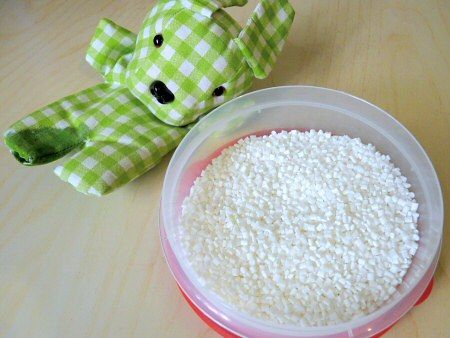
In South Africa, many craft supplies are difficult (or impossible) to find, so I’m reusing and upcycling wherever I can – I’ll be showing you more of those projects as and when I finish them! I’m hoarding my supply of plastic stuffing pellets for future amigurumi designs, so I didn’t want to use them up on this project. Instead, I went to a thrift store and found this poor sad little toy dog. I could feel that the body was stuffed with plastic pellets, so R3 (less than 50c) later, I had a carefully unpicked seam and a big bowl of plastic pellets. Despite my justifications and my careful toy surgery, I still feel like a soft toy murderer, but I really don’t think anyone would have bought this dog for a child to play with as it’s so stained and dirty, so at least I’ve given it some kind of new use.

recycling plastic pellet stuffing from an old stained toy

It took forever to stuff it pellet by pellet (I only left a small opening, but the larger pellets kept getting stuck in the funnel I’d planned to use for the stuffing…) and I probably should have used a heavier-weight fabric too, but I love the result. I used some of the leftover fabric from my One Yard Wonders designs and it’s so nice to finally get to see the adorable Japanese fabric in use on a project!

beanbag phone stand

It’s a shame the print doesn’t really show when the phone is in the stand, but now the little hedgehogs and squirrels can make me smile every time I pick up the phone and see the print that was hidden beneath it.

I definitely need to make time for more non-work projects. This was so much fun – I’d almost forgotten how much I enjoy just making stuff. Now I feel refreshed and ready for another busy week 🙂

Comments (6)

May update

Just a few quick items this month, as, behind the scenes, I’m juggling over 20 designs in various stages of completion, and trying to get my blog redesign finished so I can finally use my new logo…

Wildlife-Along CAL

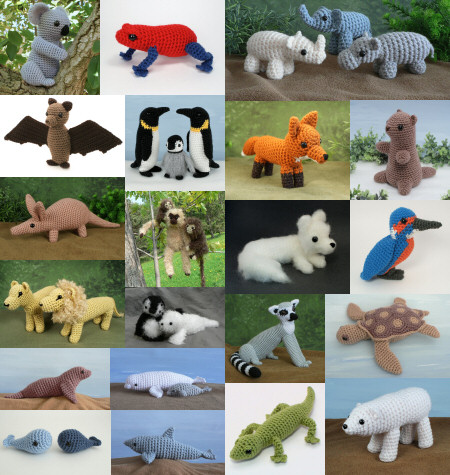
Choose from my menagerie of wild animal patterns to crochet and meet us in the PlanetJune Ravelry group for the Wildlife-Along crochet-along, running until the end of the month…

Wildlife-Along CAL at PlanetJune

You’ll find all the patterns – and a few more that didn’t make it into the above collage – in the Wild Animals category of my shop. And if you’re thinking “CAL? Huh?” or “What’s Ravelry?”, see the PlanetJune Crochet-Along FAQ for everything you need to know 🙂

With close to 100 new members in my Ravelry group over the past week (welcome to all of you!), I hope this CAL will be even better than usual!

Review and Win contest

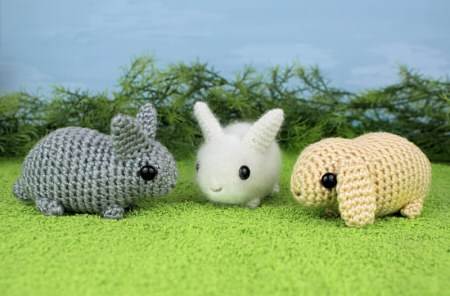
April’s ‘Review and Win’ winner is Erica A, with her Baby Bunnies review:

Baby Bunnies crochet pattern by PlanetJune

A very cute pattern that is enjoyable to make. The instructions are clear and detailed for both the crochet and the assembly. I love how the subtle shaping results in such a cute and realistic finished object. The three variations give added interest and value.

Congrats Erica – I’ll email you to find out which pattern you’d like as your prize 🙂

To be entered into this month’s draw for a free pattern of your choice, just write a review of any product in my shop – thank you!

Commissions

With 2 designs completed, the new commissions process is still going well.

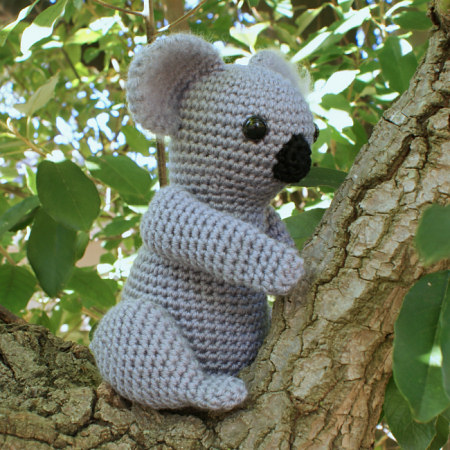
koala crochet pattern by planetjune Platypus amigurumi crochet pattern by PlanetJune

I’ve added a couple of new options to replace the animals I’ve already designed, but I’ve had requests for many more. I’ve put up a poll on my Facebook page to find out if you’d prefer to have more choices, or if too many in the list at once would get confusing – please vote (or comment here if you don’t use FB) if you have an opinion on that!

Comments (1)

Pocket-Along CAL roundup

The challenge with the Pocket-Along CAL was to either crochet animals from my pocket-sized patterns, or to miniaturize any of my other patterns by using fine yarn and a tiny hook. What I wasn’t expecting was how many people would do both – take the pocket-sized patterns and shrink them even further! You’ll see a lot of photos here with the crocheter’s hand for scale – most of the entries are keyring-sized, and in fact, you’ll see several with keychains attached.

Pocket-Along CAL at PlanetJune

For the first time this month, I’ve asked participants to follow my new guidelines for CAL photo submissions. By having all the photos supplied at a standard 4:3 ratio, I was able to write some code that will automatically generate all the photos and participant credits below – you can’t imagine how much time this will save me over time, with one of these roundup posts to write every month! (I should mention that my code orders the entries randomly, so don’t look for any patterns here.)

Don’t forget to keep reading to the end of this post for details of the May CAL – starting tomorrow!

Now onto the roundup…

Read the rest of this entry »

Comments (2)

Amigurumi Platypus crochet pattern

Here’s my second design commissioned using my new Commissions process: a Platypus! Thank you to everyone who commissioned this design from me – I hope you like the end result…

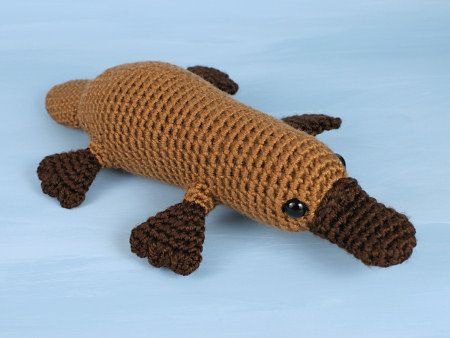
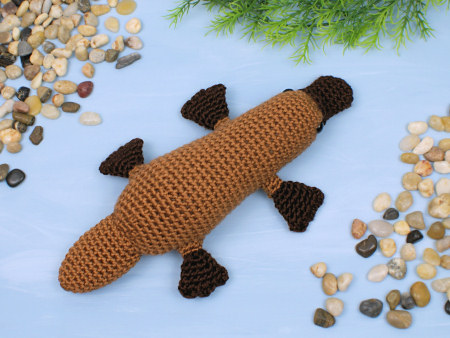
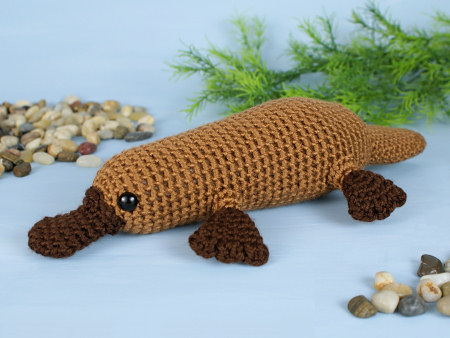
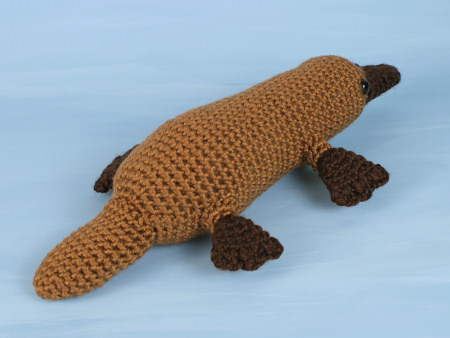
Platypus amigurumi crochet pattern by PlanetJune

You probably already know that the platypus is a highly unusual-looking animal. When it was first discovered, the specimen was thought to be a hoax (like a jackalope) assembled from a beaver and a duck!

Platypus Fun Facts

  • Platypus (Ornithorhynchus anatinus) are only found in eastern Australia.
  • They are monotremes (egg-laying mammals).
  • Platypus are semi-aquatic. They live in burrows and hunt for their food (insects and shellfish) along river bottoms.
  • It’s almost impossible to breed platypus in captivity, which is why very few people have seen one in real life – you won’t see them in many zoos.
  • The plural of platypus is sometimes written as platypus, platypuses, platypi, or platypodes!

I thought I had a pretty good idea what a platypus should look like, based on toys, cartoons, and the description of ‘beaver + duck’, but when I started my research I found I was wrong; a google image search shows a huge confusing variety, so I had to learn a lot more about them before I could truly understand what I was looking at. I watched the platypus section of David Attenborough’s wonderful The Life of Mammals over and over to see what they look like in motion, and spent a long time researching platypus features so I could make my design accurate. Here’s what I found:

  • Although all 4 platypus feet are webbed, the front feet are hugely oversized and used for paddling. The back feet are smaller and used only for steering while swimming.
  • A platypus uses its tail to store fat reserves, so a healthy platypus does not have a flat tail like a beaver’s tail.
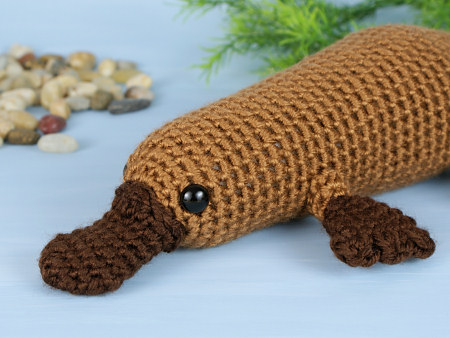
  • Platypus eyes are located just back from the beak. It keeps its eyes closed while swimming and uses electrolocation to detect food with receptors on its sensitive bill.
  • It’s very easy to understand why people thought the platypus was a hoax: the base of the bill has a really interesting shape which makes the bill look like it’s been stuck onto the front of the face and doesn’t belong there.

So I took all these facts and built them into my design to make it more realistic. My design uses a couple of neat tricks for shaping the beak and feet/legs, but it’s still easy to crochet – I always try to find that balance for my patterns.

Platypus amigurumi crochet pattern by PlanetJune

Platypus amigurumi crochet pattern by PlanetJune

It turned out to be more of a design challenge than I’d anticipated, but, several beak and foot prototypes later, I’m very happy with the result – the final shaping techniques are simple and elegant, and I think he looks really sweet. As a fun extra touch, his webbed feet are also slightly poseable – you can move them around to make him ‘swim’ 🙂

Platypus amigurumi crochet pattern by PlanetJune

I wonder which design will be commissioned next… (By the way, I have many more designs I’m also working on, so don’t worry if nothing else from the list is fully pledged for a while – there are other PlanetJune designs in the works!)

Platypus amigurumi crochet pattern by PlanetJune

If you pledged towards the commission, you should have already received your copy of the pattern. Otherwise, if you’d like to make a platypus of your own, you can now pick up the Platypus crochet pattern from the PlanetJune shop! I hope you like it 🙂

If you’re not quite ready to buy though, how about queuing Platypus on ravelry so you don’t forget about it?

Comments (6)

invisible decrease for amigurumi [video]

Link easily to this tutorial in your patterns: www.planetjune.com/invdec

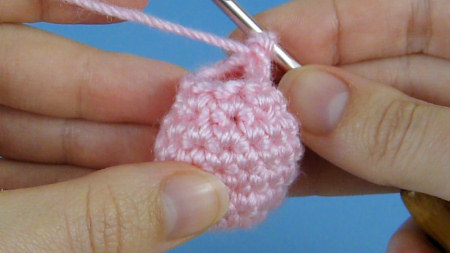
After the magic ring, what’s the one other technique you need if you want to create beautifully finished amigurumi? The invisible decrease (abbreviated invdec) – it’s absolutely invaluable. Nobody likes to look at a lumpy bottom, and that’s true even for amigurumi rear ends! The invisible decrease is as good as its name – you’ll have no more bumpy or gappy decreases once you’ve mastered this technique.

invisible decrease for amigurumi video tutorial, by planetjune

In addition to the obvious use in amigurumi, you can also use the invisible decrease for any piece worked in single crochet, in the round, without turning (e.g. hats). As it leaves unworked loops on the back of the piece, you won’t want to use it for anything where you turn between rows/rounds, or where both sides will be on display.

(If you already know how to invdec, you can skip this video, if you like – there’s nothing extra that I didn’t show you in my original invisible decrease photo tutorial – but I’m building my crochet tutorials video library and that has to include the essential basics as well as clever tips and new techniques. My next video will show you a brand new crochet technique I just developed!)

And now to the video tutorial (in right- and left-handed versions, of course):

Invisible Decrease for Amigurumi (right-handed)

Click to watch this video on YouTube.

Invisible Decrease for Amigurumi (left-handed)

Click to watch this video on YouTube.

Note: The videos may look a little small embedded in the blog: if so, you can fullscreen them or click through to YouTube to watch them full-sized 🙂

UPDATE: If your invisible decreases aren’t quite invisible and still look a little gappy, see my follow-up tutorial for tips to perfect your invdec stitches.

If you enjoy my crochet tutorial videos, please help to spread the word about them, and/or subscribe to the PlanetJune YouTube channel.


The Essential Guide to Amigurumi book by June Gilbank

Loved this tutorial? I have so many more amigurumi tips and tricks to share with you!

Boost your amigurumi skills with my latest book, The Essential Guide to Amigurumi, your comprehensive guide to amigurumi techniques and tips.


Do you find my tutorials helpful? If so, please consider making a contribution towards my time so I can continue to create clear and concise tutorials for you:

Thank you so much for your support! Now click below for loads more crochet video and photo tutorials (and do let me know what else you’d like me to cover in future tutorials…)

See more helpful PlanetJune crochet tips and technique tutorials

Comments (40)

PlanetJune Stories: Cherie Fishlock

Today’s PlanetJune Story is from Cherie Fishlock and comes to us from Australia. (Isn’t it amazing how crafting connects us all into one big global community?)

Cherie writes:

I’ve been crocheting for a year and am self taught. June’s book, The Complete Idiot’s Guide to Amigurumi, was my go-to guide when crocheting amigurumi especially after I discovered the brilliance of the invisible decrease.

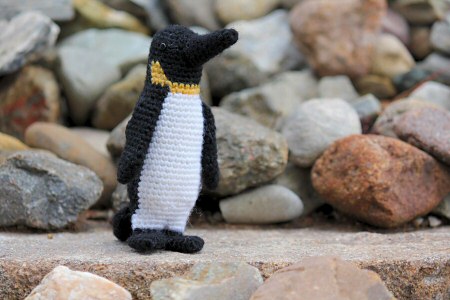
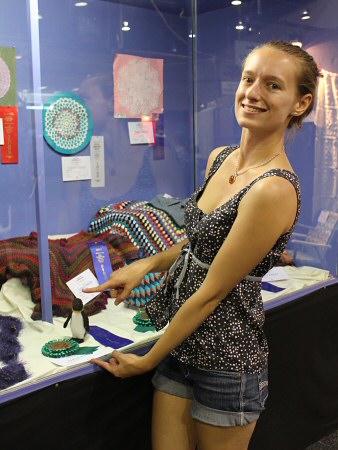
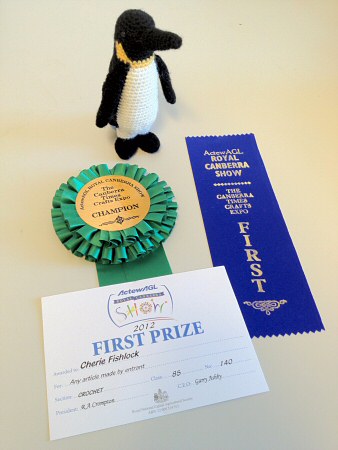
Thanks to June’s amazing emperor penguin pattern I won first prize at the Royal Show in Canberra, Australia in the beginner’s crochet class. I also won champion. It was great seeing the penguin amongst all the crocheted blankets.

I just want to thank June for the well written pattern. I must confess that I crocheted it at the last minute and her clear instructions made the process so much easier especially since I had never done colour changes before.

Unfortunately I couldn’t give June the credit she deserves; I wrote on the entry that it was designed by planetjune.com however that was not displayed.

Considering it was the first show I had ever entered I must say I’m now hooked. 😉

I am impressed: my Emperor Penguin, with its white belly and black back, is my most ambitious pattern for colour changes and Cherie obviously handled them like a pro to scoop the prizes with her lovely penguin.

Congratulations, Cherie – I’m really glad that my pattern could help you showcase your crochet skills and capture the attention of the judges 🙂

PlanetJune stories
Cherie’s Emperor Penguin.

PlanetJune stories
Cherie showing off her prize-winning penguin at the show!

PlanetJune stories
Excellent achievements: certificate, ribbon and rosette.

All very well-deserved, I think, don’t you? Please leave Cherie a comment if you’ve enjoyed this post!

Do you have a PlanetJune Story you’d like to share? I’d love to hear it! Please email your story to june@planetjune.com, together with one or more high quality photos showing what you’ve made from PlanetJune patterns. If I choose your story to feature here on the blog, I’ll send you your choice of pattern from my shop to say thank you!

Comments (7)

Cape Town wildlife XI

This is the eleventh post in my monthly series on the fascinating nature I encounter here in South Africa.

It’s hard to believe, but we’ve now been in South Africa for a whole year! Table Mountain, recently voted as one of the 7 new wonders of the world, towers over Cape Town and the entire city is arrayed around its base. When you live somewhere (as opposed to visiting on vacation) you somehow never get around to doing the major tourist attractions, so we’d never been up it. Then we had a visitor, which meant we also got to do lots of sightseeing around the city, including a trip up the mountain. It’s pretty spectacular, and I thought it deserves its own post, so you can enjoy it too…

Table Mountain is named for its 3km long flat top, which means once you get up the mountain, you can walk along the top without having to do any climbing (yay!) There are paths to walk up the mountain, but we opted for the cable car.

table mountain
The cable car is torture if you, like me, hate heights and get motion sickness, as it has big glass windows and rotates as it climbs. It’s worth it though…

table mountain
Hello Cape Town! The mountain you can see here is called Devil’s Peak and I can see the other side of it from my kitchen window 🙂

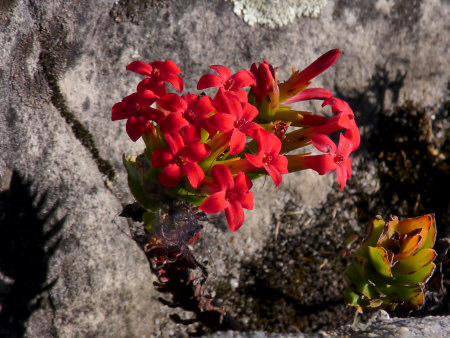
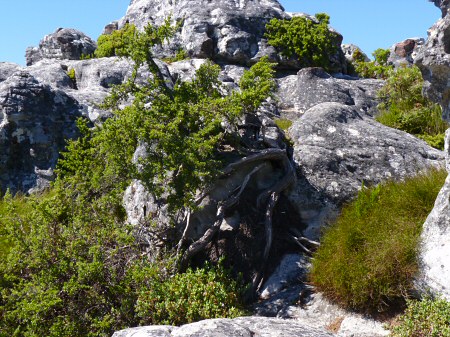
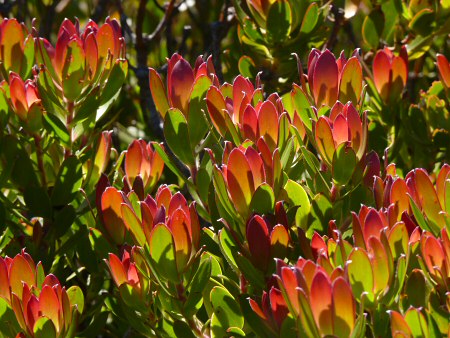
The Cape Peninsula has its own ecosystem and a massive amount of biodiversity. The plant life is called fynbos and occurs nowhere else on Earth.

table mountain
Beautiful flowers sprout from cracks in the rocks

table mountain
Naturally-occuring bonsai trees

table mountain
Lovely succulents

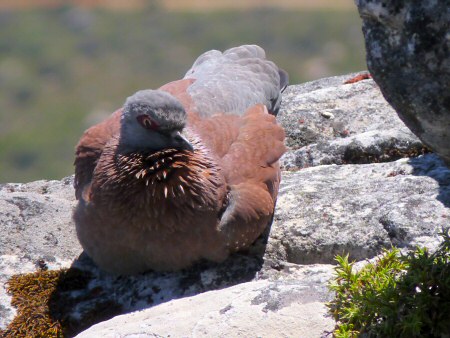
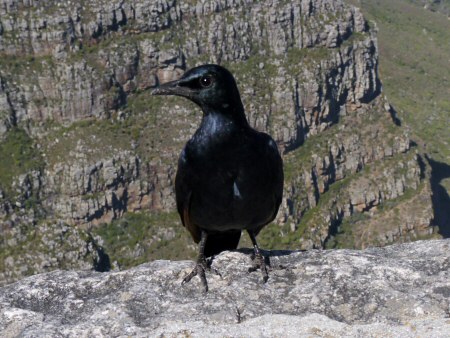
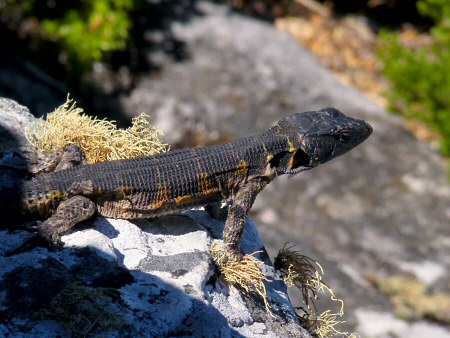
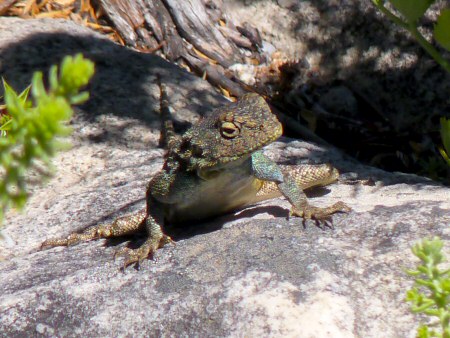
And there’s lots of wildlife up here too…

table mountain
Speckled Pigeon

table mountain
Red-winged Starling

table mountain
Black Girdled Lizard

table mountain
Southern Rock Agama

table mountain
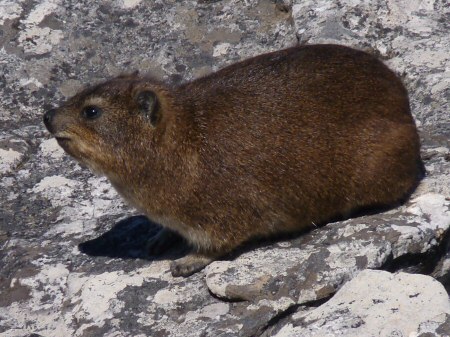
My favourite, a dassie! (Click through if you didn’t read about them in my October post.)

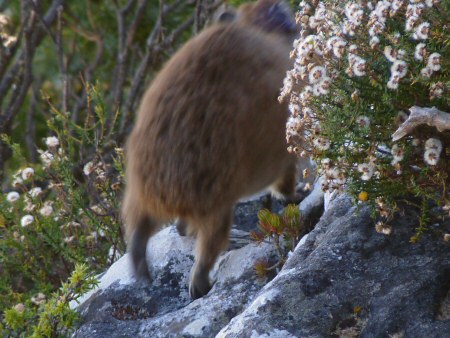
table mountain
I included this dassie photo so you can see how sure-footed they are climbing and running among the rocks – those feet really are adapted for mountain climbing.

table mountain
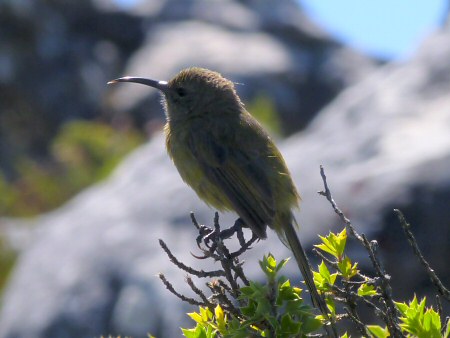
Hummingbirds are native to the Americas. The African equivalents are called sunbirds and they are similar in size and colouring to hummingbirds. This is a female (hence the drabness) – I hope I’ll be able to show you some photos of a more colourful male at some point!

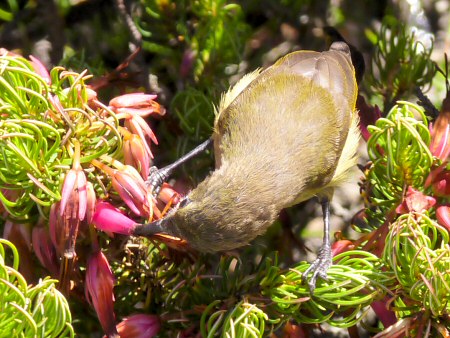
table mountain
Although they don’t really hover like hummers, sunbirds do have similarly adapted beaks so they can reach down into the base of flowers for the nectar.

We spent 3 glorious hours walking around on the mountain top, looking at all the different views and unusual plants, watching the wildlife, and taking in the unspoilt atmosphere. We all managed to get very sunburnt despite our sunblock, but it was well worth it – I definitely agree that Table Mountain should be known as a wonder of the world!

I hope you’ve enjoyed this month’s photos – please leave me a comment if you liked them.

Comments (12)

    navigation: arrow

    buy crochet patterns and accessories from my online store

    'Everyday Crochet' and 'The Essential Guide to Amigurumi' crochet books by June Gilbank

    Crochet video tutorials and step-by-step photo tutorials

    Free PlanetJune crochet patterns

    Frequently Asked Questions

    navigation: arrow

    Punchneedle Embroidery information, ebook & patterns

    Papercraft ebook & tutorials

    Free PlanetJune craft projects & tutorials

    Ravellenic Games: Team PlanetJune
    PlanetJune Reindeer Games
    PlanetJune Temperature Snake CAL

    June Gilbank

    Hi, I'm June. Welcome to my world of nature-inspired crochet and crafting. I hope you enjoy your visit!

    If you'd like to get in touch, you can contact me here.
    crocheted Canadian flag by PlanetJune
    Proudly made in Canada!
    A fanned-out pile of the books Everyday Crochet and The Essential Guide to Amigurumi, with text 'The answers to all your crochet questions at your fingertips - find out more'

    Has my work helped you?

    You can also send me a donation through my shop, or simply click ♥ Support PlanetJune ♥ before you shop at Amazon, Etsy, KnitPicks, and more, and I'll make a small commission on your purchase, at no cost to you!

    Tip: This link is also in the footer of every page!

    Thank you so much for your support!