Amigurumi Help
Here’s a handy list of all my amigurumi tutorials in one place. If you think of something that’s not on this page that you’d like to see, please let me know!
For more crochet help, see my new Crochet Video Tutorials page.
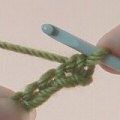
Crochet Basics (right-handed)
Crochet Basics (left-handed)
Magic Ring (right-handed)
Magic Ring (left-handed)
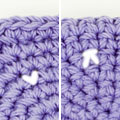
Invisible Decrease
Which is the ‘Right’ Side?
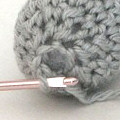
Fastening Off
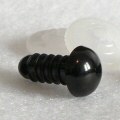
Eyes and Noses
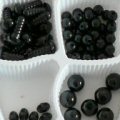
Eye Sources
Joining Amigurumi
Colour Changes
Fuzzy Yarn Tips
Fuzzy to Brushed Crochet
Sizing Up (and Down)
88 Comments »
Leave a Comment
I read and appreciate every comment I receive - thank you! Please note that I only respond to comments here on the blog, so please return to this post to see my reply, or check the above box to subscribe to comments on this post by email. -June


S Faloon said
Hi June,
I got the Fuzzy Bunny & Chick pattern and am thrilled. I can not wait to
get the yarn and make a set. A pattern and site to visit, awesome deal.
Thank you so very much!
Susan
Debbie said
I have made you Jack russel terrier, it turned out sooo cute. My niece wants a horse now. Do you have any horse patterns or plans for a horse pattern in the future??
becky said
Hi,
I am new to the knitting way of life and I am enjoying it so much. I have been felting most of my projects until I saw a book about Amigurumi and was absolutely hooked! Thankyou very much for putting up this site for us to share these great patterns, I am excited about picking my first project
Sincerely,
becky
ale said
Hi! I love all the amigurumi help you have, specially the color changing one, that really helped me with that issue… I have one request if possible, I’m lousy at sewing, and I am having a real problem doing my amigurumis smile!! do you think you can help me out with that or tell me where to look how to do that??
thanks a lot!
alex
June said
Alex, there are lots of different embroidery stitches you could use to add a smile to your amigurumi, but back stitch is probably the easiest. Here is a link to instructions for different types of stitch you could use – maybe you could try a couple of different ones and see what works best for you?
Good luck!
Tracy said
I love your site… But right now I need more pattern to pratice my skill (crochet pattern) and to love (amigurumi is too adorable!!!). I’ll join your mailing list so I can know when shall I come here to see new pattern. I need some now, so could you make some new pattern? Or plans for some?
Amigurumi Help and Pattern Sites! « said
[...] off is PlanetJune Here you can find some great crocheting tips and tricks for making Amigurumi, from crochet basics [...]
Michelle Hamilton said
Hi-
I am new to crochet and have purchased Tami Snow’s book for Tiny Yarn animals and I have a question. I do the pattern as described (thanks for unlocking the sc2tog mystery) but do not have a closed body. I have a little more than a semi-circle that is “cupped at the sides” but it is not fastened to make a closed body on all sides. There does not seem to be an instruction for doing this or perhaps being a novice do not know the nuances.
June said
Michelle: many amigurumi patterns are written so that the body is not closed – you work from the bottom up, and the body remains open at the neck. You close up that gap later by resting the head on top of the opening and stitching the two together. Read ahead to the assembly instructions and see if you can figure out if that applies in your pattern.
The other alternative is that you have miscounted your increases and/or decreases. If you use a stitch marker to mark the first stitch in each round, you can always make sure that you have the correct number of stitches when you get to the end of each round (good patterns should have a stitch count, e.g. (12 st), written at the end of each round).
I can’t say which of the two applies here, as I haven’t seen your pattern or your work, but hopefully some of this advice will help you!
SephXIII said
Hi. An absolute newbie here and I’ve a question. What hook size do you use with your work? I noticed in your fuzzy yarn tutorial, you seeming use the same size hook as the ones in your other tutorials. I’m at a loss at what hook type to buy as the yarns sold locally do not provide any recommendations on hook size, and all the ones I’ve seen are a lot smaller than yours (more for crochet yarns than the thick ones you’ve been working with).
Thanks in advance.
June said
Seph: I use different hooks sizes depending on the yarn I’m working with. Here are my top recommendations:
Worsted weight yarn: size E US/3.5mm
Bulky weight yarn: size G7 US/4.5mm
Fuzzy yarn: size H US/5mm
Depending on the actual yarn I’m using, I might sometimes use an F (3.75mm) or G (4mm) hook too, but I haven’t used anything smaller than an E or larger than an H in my designs. So if you pick up some hooks within that range (3.5mm – 5mm) you will probably be covered for any amigurumi-type work you’d like to make!
One Crafty Place » Amigurumi: Free* Patterns and Tutorials said
[...] Planet June for many tutorials to help you along your [...]
skrunkycat said
How to finish?
What do you do with your spare yarn ends once your piece is the required size? I don’t know how to tie it all off so it won’t unravel… Please help!
teerose said
love your work. Am new at amigurumi (email and tell me how to SAY it
so far, have made little mouse. any suggestions for a beginner. your tutorials are a big help
thanks
rose
Bell said
Thank you so much for putting up your Amigurumi tutorials! I am a crochet beginner and found your instructions and photos really helpful. Especially the tutorial on joining it all up. I’m going to try your Fuzzy Kitten and/or a AmiDog Jack Russell next! All of your patterns look so adorable!
Kira said
I still cant figure out the magic circle!!
I need to use it for the saftey cone pattern from aliciakachmar.com but I cant figure it out :’(
Julie said
What about joining heads and bodies? Closed to closed things. I usually end up with wobbly heads or ugly looking necks.
June said
Julie: a well-written pattern won’t join a closed piece to another closed piece. Either the head or the body (or both) should be left open at the neck so the other piece can nestle against it and you can sew them together that way. The only other options, if you really want to join 2 closed pieces are:
1) Squash the 2 pieces together so they are touching in a neck-width circle, not just at one point, then sew them together all around the circle where they are touching, keeping them squashed together the whole time.
2) Crochet a short neck piece that’s a cylinder (open at both ends), then stitch it to the top of the body. Insert a little stuffing into the neck if necessary, then balance the head on top and attach it to the neck. This would work well for something with a long neck (e.g. a horse or giraffe) but not so well for a little bear or something that doesn’t really have a noticeable neck.
But in general, design the pieces so one edge is always left open, and you won’t have this problem in the first place!
Shelly said
Hi June!
Well I have just been hooked into the world of amigurumi..My moms old co worker was a pro at this! I haven’t bought any of the materials so I want to know what you would recommend (yarn/hook size/ ANYTHING!) I should buy.. I wanted to know if there was a hook size that would work for practically everything..
Thanks,
Shelly
June said
Shelly: good question! The most commonly used yarn is a worsted weight, and the most commonly used hook is a size E (3.5mm). If you can’t find an E, an F (3.75mm) would also be fine
Other essentials: a metal yarn needle and a stitch marker or two. I’d also recommend plastic animal (safety) eyes, although the size you need depends on the size of amigurumi you’re planning to make! If you’d like to buy eyes and stitch markers, they can be hard to find in stores, but I sell both in my shop.
Hope that helps! And welcome to the wonderful world of amigurumi
SparklyShiny said
June – thanks for the comments and links to your tutorials! My great-aunt taught me to crochet when I was about 10 — and after about a month I promptly forgot. When I was in college I picked it up again and relearned from a couple of books. After tweeting with you this afternoon, I pulled out some older work and I’ve come to the conclusion that I’ve never done a regular single crochet before! My afghans and doilies seem to work the majority of new rows into chain, DC and TC spaces (very lacy stuff). So thanks for telling me I’ve been doing the single crochet wrong – I never would have noticed! Doh! Thank you for the tutorials – I have read them all now and have a much better understanding of how my finished products will look. Your patterns work up beautifully (even though I worked them in back loops only) and I can’t wait to try the next one . . . and the next one.
June said
You’re very welcome – I’m so happy I could help!
sarah said
Just wondering…can you make pattern for a manatee?
Maja Klittegaard said
I love your turotials its usefull even thoug I have been chroching for a while. I still have problems with joining rounds. I just go round and round.
This is mostly an idea for another tutorial.
Many thanks
From Maja
June said
For amigurumi, you should just be going round and round! The only time you really need to join rounds is if you’re doing a striped pattern, to avoid the ‘jog’ of colour at the end of a spiral round. Usually you can just hide those jogs at the back of the piece anyway, and just keep spiralling – it’s so much easier
D E F E C T I V E G E E K S » Blog Archive » Nutty Knitting said
[...] Planet June [...]
Liz A. said
Can you post a tutorial on how to make hair for an amigurumi doll?
I’m having trouble getting it to look right.
June said
I’m sorry, Liz – I’ve actually written lots of amigurumi hair information and tutorials, but they are for my new book (The Complete Idiot’s Guide to Amigurumi) which will be released in October. If you can wait that long, I promise you won’t regret it!
Liz A. said
Awesome! I’ll try and get it when it comes out!
aisushi said
I’m interested in seeing a joining rounds tutorial from you. I’ve seen others, but your tutorials always seem to make everything neater, LOL. I have a pattern which calls for joining rounds, and my result was fugleh. =( I’ve been practising and trying out some stuff, but I’m hoping for some tips from you, haha. Thanks for all the great tutorials!
Kelly Soo said
Hi June,
A few weeks back I came around your blog or website telling me that I can buy a little tool that you use to stuff the amigurumi. May I know where is the link again? I am looking into purchasing those prong like tool to stuff my dolls.
Thank you.
Kell
June said
Hi Kell, the link is http://www.planetjune.com/tool
Tina said
Hi – just wanted to say now that I’ve made several of your patterns that I really appreciate how well illustrated they are. Most patterns (both crochet and knit) tend to only have pictures of the finished item, but yours have pictures of the more complicated assembly steps in addition to very specific instructions on how the pieces go together. This is very helpful, so thanks for being so thorough!
Nut and Bee — Diversions and Amusements, 10/08/2010 said
[...] If you’re looking to improve your amigurumi skills Planet June has a series of excellent tutorials on the best ways to start, finish, decrease, join and embellish. If every budding amigurumist read [...]
4 strings 4 Him said
What is a ‘magic ring’?
June said
Find out here: http://www.planetjune.com/magicring
Iida said
Hi June! How will I be able to do the most simple round ball, because I would like to learn, and I have not found any records that would help. I want to do such —> http://farm1.static.flickr.com/58/184463480_0884aa
I hope you answer soon : )
June said
Iida, the link you sent doesn’t work
I don’t know what type or size of ball you’re looking for, so here’s some general advice. There are 2 ways to make a ball:
1) Crochet two hemispheres (half-ball shapes) and stitch them together, adding stuffing before you finish the stitching. Here‘s a pattern that uses that method.
2) Crochet the ball as one piece; here‘s a PDF (scroll to the bottom of the post and click the PDF link) that shows how to make a perfect sphere in different sizes.
As you can see from the link, making a perfect ball is not simple! But if you don’t want to be that precise, your best bet is to find a pattern that includes a similar shape, and learn from that. Good luck!
Barbara Muirhead said
Hi,
I am struggling a bit with the Christmas Tree pattern – I am a beginner so it’s not the pattern it’s me
. I am managing to make the bobbles but they are so tight the piece almost looks felted. Also should I be going through the whole stitch or just into the front when making rounds. Any other hints or tips that could help me out ? I have managed to get as far as the second bobble round each time I try but then give up as I can’t get the hook through.
Thank you, Barbara
June said
Hi Barbara,
Sorry to hear you’re having difficulties! You should be going into both loops of the stitch, but if it’s easier for you to go into the front loops, that would be okay too. If you’re finding everything too tight, it may be that you crochet very tightly. You can either try to relax your tension on the yarn, or (and this will be easier to accomplish!) try switching to a larger hook, which should make your stitches looser and easier to crochet into.
I hope that helps – good luck! If you’re still stuck, just email me and I’ll be happy to try to offer further suggestions….
June
Barbara Muirhead said
Thanks June – you are a star! I have gone all the way up to an ‘H’ hook and tried my best to relax my stitches a bit – I am now on round 12 and am finding it much easier to see my stitches. Once I get the hang of it I’ll try going down a size.
Nola Porter said
LOVE this site, I have gone from never doing a single stitch of crochet to making the most adorable little things for my daughter to play with – so Thank you *very* much for the awesome tutorials!!! One question about stuffing though, I see that some people use pellets to weight down the bums and sometimes feet of their toys, but I can’t seem to figure out where to buy them, or what they are put in so that they don’t fall through the holes in the crochet, LOL! Any help with this would be much appreciated! =)
Thanks again!
Nola
)
June said
Hi Nola! You can buy the pellets from most large craft stores, although they can sometimes be well-hidden! Try looking in the aisle with toy stuffing, or with doll-making supplies. The pellets come in a big bag that’s quite expensive but lasts for ages. To stop them from falling out through the holes between your crochet stitches, try making a little bag by cutting off the toe end of an old pair of nylons, pouring in the pellets, and then tying it off
MamaJunke said
My 16yr old daughter is taking a trip to Costa Rica for spring break this year with a group from school. One of the places she is looking forward to going is the Sea Turtle Preserve, I think I’m going to need to get this pattern and get cracking! Beautiful, beautiful work!
Found this Friday! – 27/11/10 « Kucachoo Crafts said
[...] this blog you’ll find help with Amigurumi, including how to make a magic ring which gets rid of that ugly hole you have when crocheting into [...]
Renee said
Hi June! I purchased your rhino pattern and it turned out so cute!
I made a hippo from the Lion Brand booklet and its a bit bigger than the rhino…how should I increase stitches in the rhino pattern to make it more proportionate to the hippo? The hippo is about 6 inches long, while my rhino came out to be 4 1/2 inches long. There’s about an inch difference in the width too.
Id appreciate any advice you can give.
Thank you!
June said
Renee, unfortunately there’s no easy way to modify a pattern to enlarge it. See my post on Sizing Up (and Down) for some methods you could try – I’d recommend you use a thicker yarn (or two strands held together) and a larger hook to increase the size of the rhino.
Rue said
Hi june!
I just bought your book from Amazon.com, and I was wondering on how to do stagger increase. I know that by staggered increases result in circular and not hexagonal crcochet, but how do you do it?
June said
Okay. When you look at a typical amigurumi pattern for a flat circle shape, it’ll look something like this (I’ve skipped the first few rounds here):
Rnd 4: (2 sc in next st, sc in next 2 st) six times
Rnd 5: (2 sc in next st, sc in next 3 st) six times
Rnd 6: (2 sc in next st, sc in next 4 st) six times
Rnd 7: (2 sc in next st, sc in next 5 st) six times
As you can see, the increases (the ’2 sc’s) are all at the beginning of each repeat, so they all end up stacked on top of each other. As the circle continues to grow, the increases tend to form a hexagonal shape, with the corners of the hexagon at the increase points. (For anyone else who’s reading this, you can see an example on p61 of The Complete Idiot’s Guide to Amigurumi).
To prevent this you need to stagger the increases by moving them within the repeat. So, for example, in Rnd 6, each repeat has one increase and 4 single crochets worked even. Instead of crocheting (2 sc in next st, sc in next 4 st), you could move the increase so you crochet (sc in next 2 st, 2 sc in next st, sc in next 2 st), then repeat that around the circle for that round.
You need to still end up with the same number of stitches at the end of the round, and space out the increases around the circle, but by moving the position of the increase within the brackets (..) and then repeating your new pattern around the circle for the whole round, it’ll all work out properly.
Move the increases for some, but not all, the rounds, so that each round has increases at different points around the circle, and because the increases are no longer stacked on top of each other, you’ll avoid creating a hexagonal shape instead of a circle!
anndelise said
Like Rue above me, I too am wondering how to do the stagger increase for a flat circle.
June said
Thanks for the reminder – I’ve replied (above) now
anndelise said
Thank you so much.
btw, beginner crocheter here, and I love learning things the way your book teaches. Learning how to create my own parts, and problem solving with yarn and hook, rather than be stuck following other people’s patterns is the way I prefer to learn. I not only purchased this book for myself, but also for my friend who first showed me a book on amigurumi critters.
My only other question is…would you consider a similar style book for clothing and/or accessories?
Anyways, thank you so much for taking the approach you did with your book. It is definitely one I will recommend to any crocheters I know who might be interested in making amigurumi.
And thank you also for being so responsive to the question.
ann
June said
You’re very welcome, and I’d love to write the clothing/accessories book you suggest! I just have to get my move to South Africa out of the way first, and then we’ll see what happens
Nickie said
Which pattern would you say is the easiest? I am just a begginer, and want to make a couple of whatever pattern I purchase. What would you suggest?
June said
Nickie, that question is on my to-do list of things to add to the FAQ!
My PocketAmi Sets 1 & 2 are designed especially for beginners (that’s the link to buy both sets together; you can also buy them as 2 sets of 3 each if you’d prefer). They are small so don’t take long to crochet, and they have no colour changes and few pieces to stitch together, so they’re really good for beginners
Then you could move onto some of my larger patterns that don’t have any colour changes, for example my Dolphin and Dachshund would both be quite easy.
Hope that helps!
Nickie said
When is your next CAL? I would like to give it a try.
Nickie said
Would the gecko be considered begginerish? Sorry if i am taking up your time with my questions- i just have so many!
Nickie said
Arn’t you going to answer my two previous questions?
June said
Nickie, I do apologise – I thought I’d replied to these already!
1) I’m very busy at the moment packing up to move to South Africa, so I have no plans for another CAL at the moment.
2) No, I wouldn’t call the gecko beginner-ish – the legs are very thin tubes which are a bit tricky to make, and the feet are a bit fiddly too. I’d stick to patterns made with basic, simple looking shapes (nothing with very fine detail and tiny pieces) until you get some confidence with your amigurumi making.
If you have any more questions, just email them to me (june@planetjune.com)! That way, I’m much less likely to lose track of your questions if I don’t have time to reply immediately
giocondabarahona said
me gusta mucho el tegido tus enseƱansas son muy completas te felicito
Amy said
Hi June,
I am enjoying your book, The Complete Idiot’s Guide to Amigurumi. I am a newbie and I am also left handed. Your crochet basics and magic ring tutorials for lefties are so helpful to me. Thanks!
Parthenis said
Hi June !
First I want to thank you for your wonderful tutorials. I learnt all about amigurumi thanks to it ! And I’m very happy I can make my way in this new world of absolute cuteness *_*
So here’s my demand : could I traduce your tutorials for some friends of mine who don’t understand English well ? (Yeah, I’m French. My apologies for my strange sentences XD) Of course I’ll credit you with a link to this page ^^
Long life to this blog !
Parthenis
Parthenis said
It’s not “traduce” but “translate” u_u” Don’t know why I said that…
Juliana Brandelli said
Do you send it to Brazil?
June said
Yes, Juliana, you can download your patterns as soon as you’ve paid – from anywhere in the world!
flower phone case pattern « Cult of Crochet said
[...] handed – in the end I found wonderful instructions with left and right handed photographs at Planet June. The instructions for this phone case work fine left or right handed but the photographs show the [...]
Hedgehog Pincushion « Cult of Crochet said
[...] 1. Create a magic circle with 6dc and slip stitch [...]
Tracy said
Hi June,
First off I wanted to thank you for your very helpful guides, I wouldn’t have accomplished the magic ring without you! I have been looking for your book in the local stores but haven’t found it yet so I was wondering if you can give insight on something. I am working on my first amigurumi and I’ve noticed that some patterns I have seen call for a slip stitch at the end of a round then a chain stitch at the beginning of the next, in addition to the sc stitches (e.g.1st round: 2 sc into every sc (of a 5 stitch magic ring) to end up with 10st, slip stitch, then 2nd round: ch 1. 1 sc into every sc (10 st). I might be missing something but this always seems to give me an extra stitch at the end. Can you shed any light on what I may be doing wrong?
June said
Hi Tracy, yep I can help with that! The ch 1 at the start of the rnd and the sl st at the end don’t count as stitches unless the pattern specifically says to do so. So, here’ how to avoid gaining a stitch every round:
That looks like a lot but try following the instructions as you crochet and you’ll see it’s easy – just mark the first sc of each round and you can never go far wrong!
Nancy said
Hello – I am fairly new to crocheting and infatuated with the Amigurumi dolls.
So happy I found your site and know I will be using it a lot! And I’ll be getting your new book too.
I am working on my first project it’s a larger frog the finished product should be 9″.
As I stuff the pieces I’ve finished I see stuffing through my stitches.
This toy is for my 15 month old Grandson and I’m afraid he could pull it out.
What do you suggest I do?
Thank you!
Nancy
June said
Nancy, the key to amigurumi is to crochet tightly to produce a firm fabric with small gaps that the stuffing won’t show through. To do this, you need to use a smaller hook than is recommended for your yarn – typically at least 1-2 sizes smaller, but possibly smaller still if you crochet loosely. For example, with worsted weight yarn, which may recommend an H hook (5mm) or larger, I use an E hook (3.5mm).
Unless you want to restart your frog with a smaller hook, it’s too late to fix it after the fact, but what you could do is make a little bag from the toe end of an old pair of hose or stockings, and use that as a liner inside the frog. You’ll need one bag for each piece of the frog. Put the stuffing inside the bag, tie a knot in the open end, and at least the stuffing will all stay contained, even if you can see the bag between your crocheted stitches!
Nancy said
Thank you June! I am impressed & thrilled that you answered me so fast..
I wish I found you before I started! That’s a great idea about using “toes of hose” for stuffing. I will try it I’d hate to start all over then again I want it done right..
Thanks again!
Nancy
Lynn said
I’ve been a long time fan of your site and appreciate all the tips and suggestions you have that are so easy to follow
I’m working on a project where someone likes a doll I made, but they want it twice as large. What are my options for doubling it’s size? I had a lot of headache laying out the stitches for my current pattern so I feel more than a bit intimidated about scaling them. I’ve seen elsewhere mention the simplest option being to double the yarn or use a thicker yarn and a larger hook, but what size hook should I go to in such a case? Currently I’m using a size G.
Thank you for taking the time to read and reply.
June said
Lynn, I’ve written a post about just this topic! http://www.planetjune.com/blog/sizing-up-and-down/
If you look at Method 3 there, that’s exactly what you were planning to do: double the yarn and go from a G hook to a larger hook. I used an L, so you could probably do the same. The bad news (for you) is that it only increased the size of the finished piece by 1.5x, not 2. And of course the stitches are much chunkier and the gaps between each stitch are much larger – I don’t think I’d use this method with any thicker yarn and hook than that. I think to go as large as twice the size, I’d just start over with a new pattern – sorry I don’t have better news for you! But read my post anyway – it may give you some ideas for how to tackle it. Good luck!
Lynn said
Thank you very much for your experienced knowledge!